
Stop Grading Every Homeschool Assignment
If you’ve got a stack of worksheets on the counter and a red pen that’s giving you anxiety, I need you to hear this:
Not every homeschool assignment needs a grade.
That isn’t cutting corners. It’s actually how assessment works, even in a traditional classroom. Teachers don’t grade every paper that crosses their desks. Some assignments are practice, some are checked for completion, and only certain assignments are graded to measure whether a student has mastered a concept.
But nobody tells you that when you start homeschooling. Most of us default to what we remember from our own school days, which is red ink on everything. Before long, we’re buried in papers and wondering why homeschooling feels so heavy.
It doesn’t have to be that way. I’ve been homeschooling for over 23 years, I have a master’s degree in education and curriculum design, and I have never graded everything. Let me show you the method that works for our family, one that saves time, reduces stress, and actually teaches your child to take responsibility for their own learning.
Prefer to watch? I walk through our whole grading method in this video. Then keep reading for the age-by-age breakdown.
Do You Have to Grade Every Homeschool Assignment?
No, you don’t.
One of the biggest misconceptions about homeschooling is that every assignment needs a letter grade or a percentage. Even classroom teachers don’t work that way.
Every assignment has a purpose. Some assignments help a student practice a new skill, and others reveal whether they truly understand what they’ve learned. Once you recognize the difference, grading gets a whole lot lighter.
Think about a handwriting page. If your child carefully forms each letter and keeps their writing on the lines, what exactly are you grading? Are you going to give them a B minus in handwriting? That page did its job the moment they picked up the pencil.
So much of what our kids do every day is practice:
- Copywork
- Daily reading
- Grammar practice
- Spelling practice
- Worksheets that reinforce a lesson
Practice doesn’t need a grade. It needs a set of eyes to confirm the work was done with reasonable effort.
What Homeschool Work Should Be Graded?
Some assignments do need careful evaluation, because they tell you whether your child is ready to move forward.
Math
Math builds one lesson on another. If your child doesn’t understand lesson 12, lesson 13 is going to be a disaster.
That’s why I always grade math for accuracy. In our house, I require 90% or better to move on, and if they don’t hit that, we go back and rework the problems they missed.
We also use a math program that grades automatically. My kids get instant feedback the moment a problem is wrong, which means they aren’t practicing mistakes all day only to discover them later. If you can find a program that does this, it’s worth its weight in gold.
Writing
Writing assignments deserve thoughtful feedback, because they measure skills that develop over time. Rather than putting a percentage on an essay, I use a writing rubric so my kids understand exactly where they succeeded and what they can improve.
Tests and Quizzes
Formal assessments exist to measure understanding, so these get graded.
Projects
Projects combine multiple skills and show whether a student can apply what they’ve learned, so they’re worth evaluating more carefully than everyday practice work.
For everything else, I mix it up. Some days I spot-check for accuracy, and some days I only look for completion. My kids never know which it will be, and that keeps them honest. When they know I might check any assignment closely on any given day, they’re far less likely to rush through their work.
What Assignments Only Need a Checkmark?
Plenty of homeschool assignments only need confirmation that they were completed with care:
- Handwriting
- Copywork
- Reading assignments
- Spelling practice
- Vocabulary review
- Grammar exercises
- Practice worksheets
I glance at the work, make sure nobody faked their way through it, and put a checkmark on the paper and in their planner. Did they complete the assignment? Did they put forth reasonable effort? If the answer is yes, that checkmark says the assignment fulfilled its purpose.
Should Homeschool Students Check Their Own Work?
In many subjects, yes, they should.
I have my kids check their own work in subjects with clear right and wrong answers. Grammar, vocabulary, history review, and most workbook-style assignments can all be self-checked with an answer key. I confirm the assignment is complete, hand over the answer key, and they mark what they missed, figure out why, and correct it.
I can already hear some of you saying, “Kim, they’ll just cheat.” Some kids might try that at first. But a child who cheats on a self-checked assignment is only cheating themselves, and they figure that out quickly when the material shows up again later and they don’t know it.
More importantly, checking your own work is where so much of the learning happens. When my daughter checks her own grammar and finds a wrong answer, she has to go back to the rule, understand her mistake, and fix it. That’s deeper learning than me circling it in red and handing it back three days later.
I start this around third grade. Before that, I check everything myself.
Do You Need a Separate Homeschool Gradebook?
You don’t, because the planner does that job.
In our house, each child has a student planner with a weekly checklist. They record what they finished each day: L1 for lesson 1, L2 for lesson 2, and so on. Depending on the curriculum, that might be Q for quiz, T for test, C for chapter, or N for novel.
Next to each lesson is a spot for the grade. When the math program shows a 92%, they write it in the grade box. When I grade a writing assignment, they record it. When something only needs a completion check, it gets a checkmark.
Through elementary school, I check planners every single day, and that part is non-negotiable. When my kids bring me their planner, I can see at a glance what got done, what the grades look like, and whether anything needs my attention. They also know that nothing moves forward, no free time and no afternoon activities, until I’ve looked at that planner and everything checks out.
Once they hit middle school, I switch to checking planners once a week. By then they’ve had years of daily habits, and they’ve earned the independence to manage their days without me looking over their shoulder every afternoon.
For high schoolers, I also keep a shared spreadsheet where we enter grades at the end of each week. When the semester ends, the averages are already calculated, so there’s no scramble to reconstruct six months of work from a pile of papers.
How Homeschool Assessment Changes by Age
The way you assess your child’s learning naturally changes as they mature. This is how it has looked in our home at every stage.
Kindergarten Through Second Grade
At this age, almost everything is oral assessment. You’re asking your child to retell a story, name words in a word family, count objects, and identify letters. Short checklists work well for tracking skills like letter recognition and number sense. I like to assess three times a year, at the beginning, middle, and end, so you can see progress over time. Formal grades aren’t necessary yet.
Third Through Fifth Grade
This is where the planner and the daily checkmarks really kick in. I check most daily work for completion and grade math for accuracy every day. At this stage I use E for excellent, S for satisfactory, and N for needs improvement, which gives kids feedback without the pressure of percentage grades.
It’s also the age when I begin teaching my kids to check some of their own work. If your state requires a report card, those categories translate easily.
Middle School
Middle school is when we transition to true percentage grades, mostly to prepare for high school. I also move from daily planner checks to weekly ones, because by now the habits are strong. This is a great age to introduce rubrics for writing and projects, and our free writing rubric gives both you and your student a clear picture of what “good” looks like on open-ended work.
High School
High school is when you need traditional letter grades that calculate into a GPA, even if your student isn’t planning on college. We keep grading assignments in the planner the same way we always have, but now grades also go into the shared spreadsheet weekly, and the semester averages are finished before we ever need them. I weigh everything equally so a student who doesn’t test well isn’t penalized.
And the transcript? Don’t let it intimidate you. A transcript is really just a fancy report card, and our free, fully editable version makes it even easier. [link the free transcript]
A Simple Homeschool Grading System That Actually Works
Let me put the whole method together, because I know it can feel like a lot of moving pieces.
Each day:
- My kids complete their assignments and record each lesson in their planner.
- Practice work gets a checkmark.
- Math, writing, tests, and projects get grades when appropriate.
- They self-check the subjects that use answer keys.
Each week:
- I review planners (daily through elementary, weekly after that).
- I grade writing and projects, and we pull their best work for the portfolio.
- High school grades go into the transcript spreadsheet.
Each year:
- We update the portfolio and finalize transcripts, and the record keeping is already done because the work was documented all along.
There’s no color-coded binder system, no three-hour grading marathon, and no guilt about the stack of papers you haven’t looked at. My kids carry most of the weight by recording, tracking, and self-checking. I review, verify, and step in for the assignments that genuinely need my evaluation. That’s a workload a mom can actually sustain year after year.
The Goal Isn’t Better Grades
Saving time is a real benefit, but it isn’t the best part.
The greatest advantage of this method is that it teaches your child responsibility. When students record their own assignments, track their own progress, and correct their own mistakes, they’re learning to manage themselves.
They learn to handle deadlines and hold themselves accountable. They learn to recognize when they need help. Those habits matter long after homeschool ends.
My kids went into college already knowing how to track their grades, manage a schedule, and ask for help when something wasn’t clicking. That didn’t happen because I drilled it into them. It happened because they’d been doing it since third grade.
Student Planners That Simplify Homeschool Record Keeping
The easiest way to start is with a planner designed for student ownership, because this method only works if your child has one place to record everything.
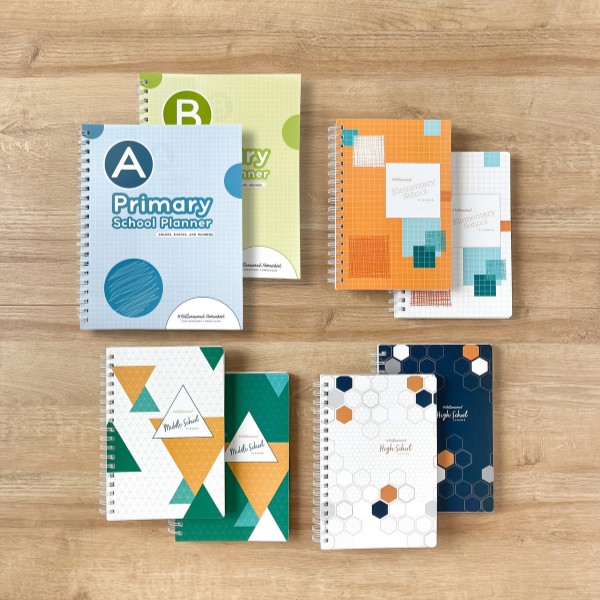
Our Student Planners give your child that place. They record daily lessons, track completed assignments, and log their grades, and you review it all in one spot. The middle school and high school planners meet your student right in the season when this method pays off most: your student manages the daily tracking, you review it weekly, and by high school, the planner feeds directly into the grade records you’ll need for a transcript.
→ See Our Student Planners Here
If writing assignments feel hard to evaluate, pair your planner with our free writing rubric so both you and your student know exactly what “good” looks like on open-ended work.
Stop grading everything. Grade what matters. Let your kids handle the rest.
Frequently Asked Questions
Do homeschoolers have to grade every assignment?
No, they don’t. Many assignments are practice and only need to be checked for completion. Grades matter most when you’re measuring mastery of a concept.
What homeschool subjects should always be graded?
Math, writing, tests, and larger projects should be graded, because they measure understanding and tell you whether a student is ready to move forward.
Should handwriting receive a grade?
Usually it shouldn’t. Handwriting pages are practice, so a quick review for neatness and effort is enough.
Can homeschool students grade their own work?
Yes, they can. Subjects with clear right and wrong answers give students an excellent opportunity to check their own work and learn from their mistakes.
Do I need a homeschool gradebook?
You don’t need a separate one. A student planner can record completed lessons and grades, and a basic spreadsheet can handle the averages when high school transcripts come into play.
When should homeschool students start receiving grades?
Most families introduce more formal grading in the upper elementary years, with percentage grades becoming standard in middle school to prepare for high school.
How do homeschool parents keep records?
Student planners, portfolios, and, in high school, a straightforward spreadsheet will keep accurate records all year without a separate gradebook.
How do I make grading less overwhelming?
Separate assignments into two categories: work that needs a completion check and work that truly measures understanding. Grading only the second category dramatically reduces your workload while still giving your child meaningful feedback.

Through practical tools & Bible-based resources, Kim Sorgius is dedicated to helping your family GROW in faith so you can be Not Consumed by life’s struggles. Author of popular kid’s devotional Bible studies and practical homeschooling tools, Kim has a master’s degree in education and curriculum design coupled with over 2 decades of experience working with kids and teens. Above all, her most treasured job is mother and homeschool teacher of four amazing kiddos.