
Homeschool Science Curriculum: A Complete Plan From Preschool to Graduation

Nerd alert: I LOVE science. (That’s why talking about homeschool science curriculum makes me super excited!)
Yep. It’s true. In high school, I couldn’t put down the Biology textbook. I was even president of the Biology Honors Society. Oh, and for fun, we spent our time blazing a trail on the back of the school property and growing various habitats.
I already feel better just getting that confession off my chest. Haha. So how about you? Do you love science? Or are you one of those parents who would rather have a root canal?
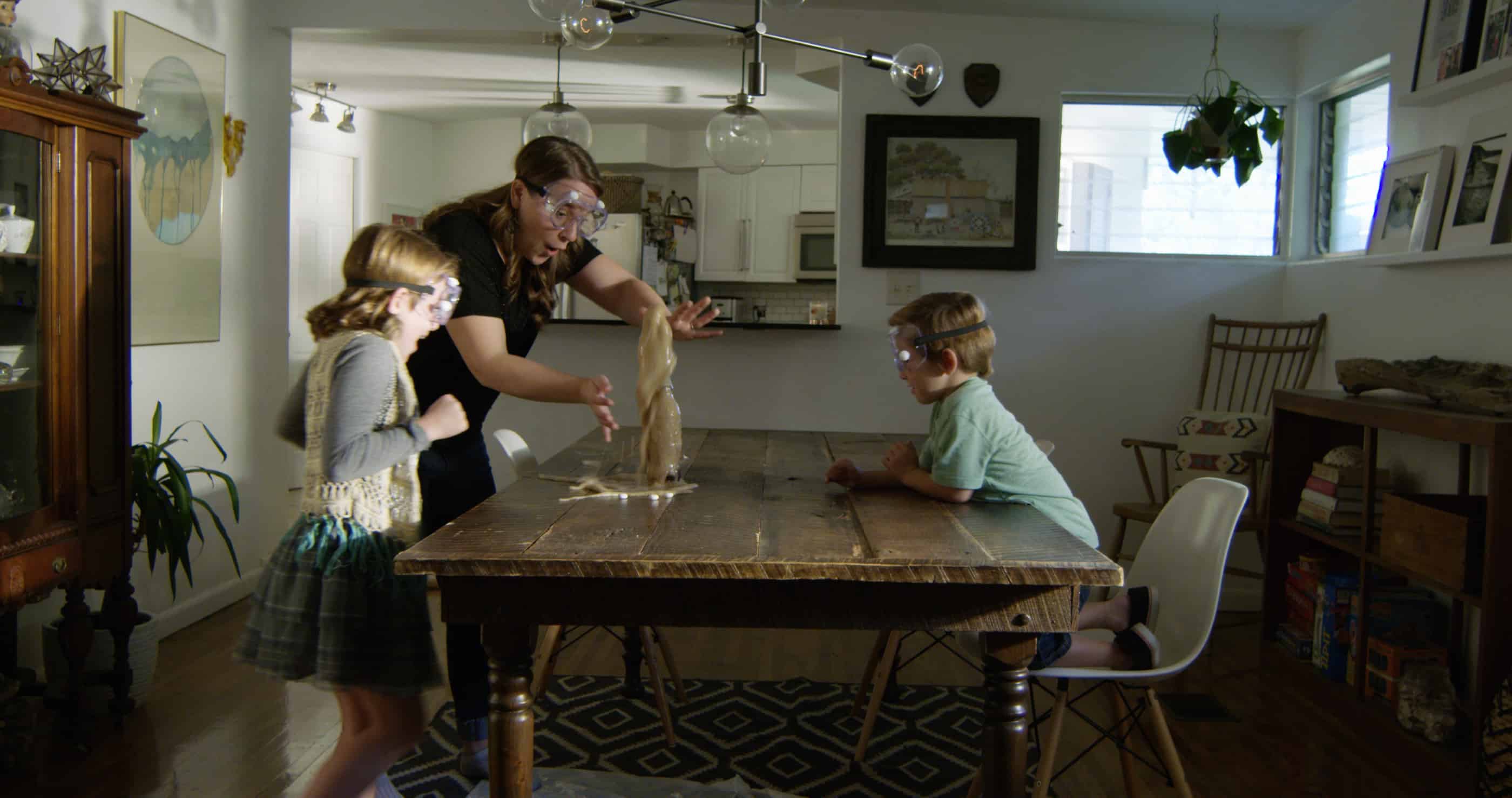
Perhaps you enjoy science but haven’t really found a way to engage your kids in learning it. Sometimes, we can get so caught up in memorizing seemingly random names, facts, and compounds that we miss the beauty of science.
Yep. I said science is beautiful. In fact, it ought to be every Christian’s favorite subject because in the learning of science, we can truly enjoy and find awe in all that God has created for us.
But I totally get your hesitation. Teaching science sometimes brings with it feelings of inadequacy, fear of anti-Christian agendas, and flashbacks of 100s of flashcards from our high school years. Stick with me for a few minutes, and let me help you see a homeschool science curriculum plan that won’t be quite so daunting.
Table of Contents
Why We Teach Science
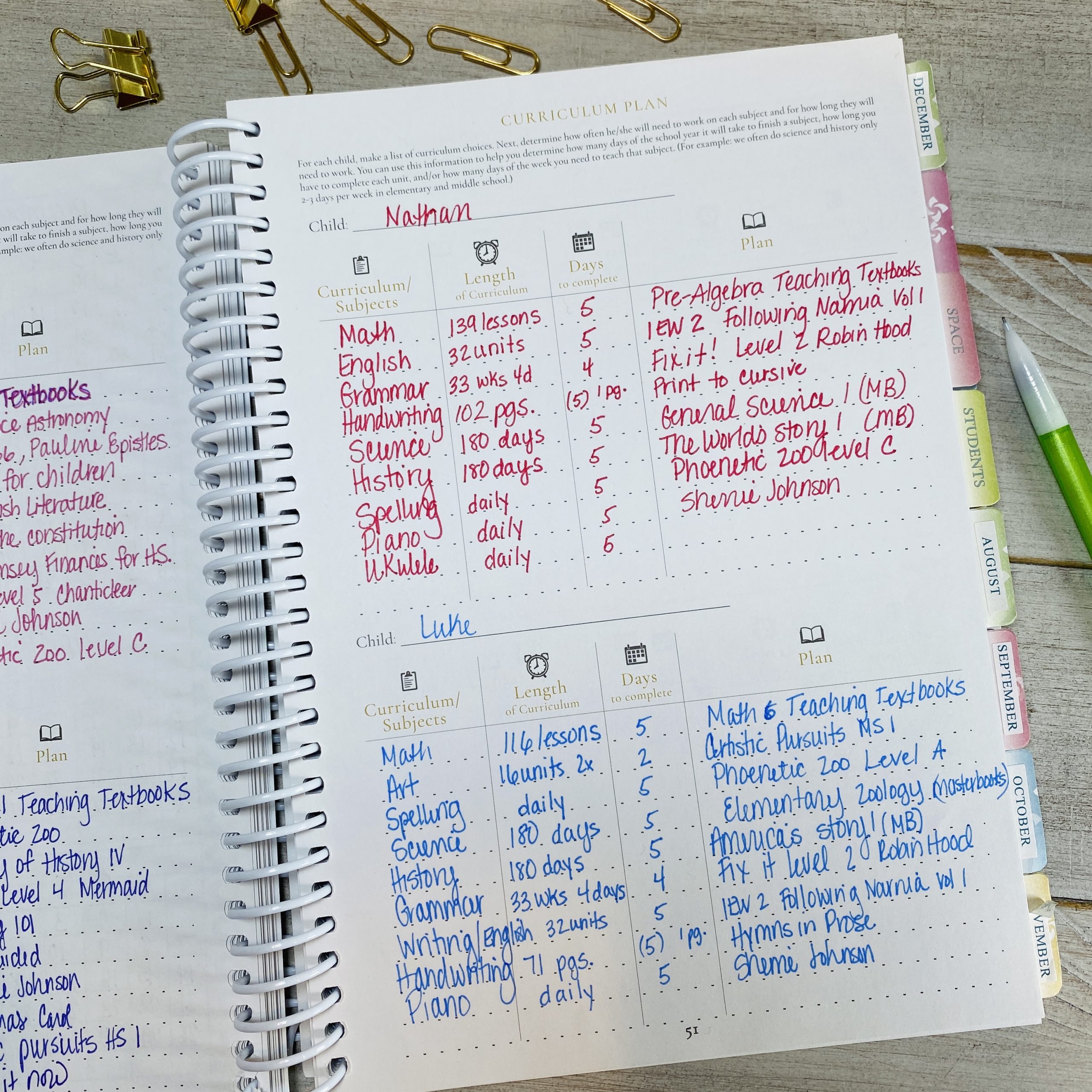
Before we get to the nuts and bolts of science, we have to talk about our reason why. I record my science vision in my Organized Homeschool Planner. Every year, I challenge myself to come up with biblical reasons for why I was teaching certain subjects, and I share these with my kids to help motivate us all.
For science, our “why” was to help us take better care of the earth, to help us hear God speak through creation and marvel at that creation, to help us discover God’s hidden treasures, and to help us defend the Bible’s truth.
I grew up thinking that the Bible and science contradicted one another, but they don’t! That’s one of the most important things I wanted my kids to get out of science education in our home.
Tips for Teaching Science
Let me share four tips I learned while teaching science in our homeschool.
First, always keep science in its place. Science is only a core subject if you’re in high school. If you’re not, only reading and math are your two most important subjects. Now, that doesn’t mean you can’t or shouldn’t teach science. It just means we need to make sure that math and reading take priority over everything else we do in our homeschool. If either of those subjects isn’t going well or needs more practice, focus your time there. Don’t feel burdened by other subjects, such as science. Your kids will be just fine if you come back to science later.
Second, science is always best learned by doing, seeing, and touching. That doesn’t mean we can’t use books, but it’s something to keep in mind. Look for creative ways to give your kids hands-on experiences, whether it’s field trips, experiments, or nature walks.

Third, all science should focus on the scientific method. When I say the scientific method, I mean teaching our kids to ask questions in a scientific way, like “I wonder what will happen if…” If our children learn to explore, solve problems, and look at things from different angles, we’ll be successful in science. It’s really okay if they can’t name every bone in the body or classify every animal in the kingdom.
Fourth, whenever you pick a science curriculum or even a science book – anything that’s helping you teach science – be mindful of worldview. Everything has one; everything pushes an agenda. In this culture, more than ever, we have to be super careful. The Bible warns us against false teaching and wolves in sheep’s clothing. Make sure to filter through and look at what you’re teaching. Don’t just assume.
A Complete Plan From Preschool to Graduation
Homeschool Science Curriculum for Elementary
I like to start our elementary science in the backyard, and that’s why we created Backyard and Beyond. This kindergarten curriculum takes kids on nature adventures in their backyard and community. Kids develop essential literacy and math skills while exploring the great outdoors. It’s a win-win. Check out our video walk through here.

I don’t recommend buying a “science” curriculum unless it’s integrated with your core subjects like math and reading.
The biggest reason goes back to my first tip: math and reading must be the core in the early years. We have to focus on getting really strong math skills and really strong reading skills to build that foundation. Once that foundation is built, then we can branch out into different areas of science.
When my kids were little, we read great, amazing, living books about science. We kept a notebook (think a composition notebook with blank pages) of all the things we’d read, and we just explored interests as they came up. This is our science journal. Don’t get too overzealous about this. It can be a killjoy. Just allow your kids to draw or write something that interests them.
Sometimes I have them narrate facts to me, and other times we don’t. Let it be natural and fun!
I know this method is a little non-traditional, but remember, there is a reason we didn’t go with the traditional school option anyway, right? During these years, we took a lot of walks, explored nature, and went on numerous field trips.
Here’s an example of one of the things we did for science. A while back, we took a family trip to the Grand Canyon, so we kept a Grand Canyon notebook. We explored, colored, and drew pictures – all of this before we went to the Grand Canyon so my kids would have an idea of what to expect. It was tons of fun! They drew pictures, and I would narrate for them.

This science journal approach can be done thematically, like we did with the Grand Canyon, or you can just put everything in one journal as you read books and explore. It should be a very casual thing to do.
Late Elementary Science
At this stage, if everything else is in place, you haven’t had any hurdles with reading, and you feel like all of that is strong, you can try a more traditional curriculum. But don’t feel pressured.
My son, Luke, didn’t start a traditional science curriculum until fifth grade. This wasn’t because he wasn’t ready with math and reading, but because he was doing chemo treatments, and I didn’t want to frustrate the situation. I knew science could wait, so we focused on math and reading during that time.
If your kiddos master reading and math and you’d like to add a little more for those upper-level elementary years, here are a few of my favorites.
We LOVE Apologia science curriculum. It’s hands-on, provides tons of notebooking experiences, and is just plain fun. Our favorites have been Flying Creatures and Swimming Creatures, but they are all great.

One of the reasons I opt for Apologia is that I absolutely KNOW I can trust the content being taught to my children. Not only is evolution taught as an incorrect theory, but students are also given tools for supporting and proving the fact that God created the earth. I love this point of view!
We also love Master Books science. I love that it’s lighter in content but gives kids plenty of opportunities to dig deeper. Luke tried Elementary Zoology by Master Books. One of the things I really loved about this curriculum was that it came with activity books and living books that were super fun and engaging for kids his age, and it also came with worksheets and activities. These living books are mostly Answers in Genesis books, which is a trusted company forbBiblically sound science materials.

Another idea for later elementary, especially if you have multiple children, is unit studies. Unit studies were like my dream homeschool method! Let your kids pick a topic that many of your children (at least kindergarten through eighth grade) can explore together. You can find resources on the Internet – some are already put together for you, and some are just printables. You can just start a Pinterest board and collect ideas and follow the interests and passions of your kids.
Homeschool Science Curriculum for Middle School
Most people would say that middle school is the time to really hunker down and push hard in science. I disagreed. I found that middle school was a great time to dig into topics that my children had extreme interest in. We enjoyed things like marine biology, astronomy, anatomy, and ecology. My kids loved studying these topics, and it gave them a passion for science.
So I highly recommend that you consider letting your kids pick what they’re going to pursue in middle school. My seventh grader, Nathan, did General Science from Master Books. Similar to the elementary age, this stage came with beautiful books that weren’t as intimidating as a textbook – they were smaller and more engaging. He also did a chemistry class like this.
Another example is astronomy. It’s a fascinating subject that usually doesn’t fall on the high school transcript. Kids LOVE it, and the study of it builds scientific skills and knowledge without seeming so, well, “scientific.” My friend Luke Gilkerson has a course that we love called Experience Astronomy.
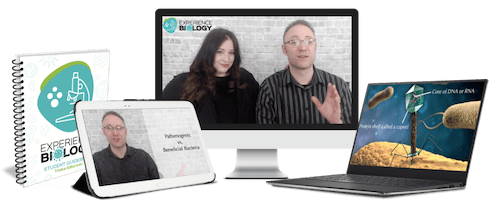
In the course, Mr. Gilkerson teaches the kids on video each week, assigns homework (think star-gazing), and even gives quizzes. Each one of my kids has been excited about middle school, so they can enjoy this course! Oh, and did I mention you get ALL of this from a strong Christian perspective? It’s a win-win for sure. You could also save this subject for high school if you wanted to.
.png)
Homeschool Science Curriculum for High School
Once you get to high school, you’ll need to make sure you know the requirements of your state. You can find these on the HSLDA website. Parents almost always assume that you must take biology, chemistry, and physics – no question, no choice. When I read the South Carolina requirements, they never mentioned that those subjects were actually required.
Now, some colleges may require specific science courses. I would highly recommend that if your child has an idea where they might want to go to college, pull up their requirements and read them. We found that colleges weren’t nearly as stringent about that as you might expect.
With that in mind, we had a more flexible view of what high school science could look like. I had two high schoolers at one point. My daughter, Rachel, did Biology 101, which was a DVD series covering all the major concepts in biology. She kept a notebook where she watched the videos, noted things, drew diagrams, and documented what she was learning. I had her do some projects and experiments alongside that.
The reason I approached it that way for her was because I wanted to make sure that reading wasn’t a stumbling block in science. Science should be about science and not about reading, right?
My oldest child did Apologia Biology and loved it. Apologia also offers online classes, and, of course, you can buy the books and the teaching CDs, too. Later, my youngest went a little outside the box and took Experience Astronomy at the high school level. This was a full 36-week course guiding kids through the study of astronomy with quizzes and lectures – all the things you would expect from a typical high school course but in a really fun way.

My friends Trisha and Luke also had a high school level biology course that Nathan was excited about taking when it was his turn. These types of courses are great because they provide excellent teaching, an independent curriculum, and a strong biblical worldview all in one! Eventually, all of my kids ended up moving to the Gilkersons Journey Academy for their super-engaging online science courses. Students watch lectures, complete assignments, and even take quizzes.
I hope this encouraged you and that you found a few tips and resources to help as you seek to teach your children how amazing God is through the study of science.
Remember, science doesn’t have to be complicated or scary. Keep your priorities straight, focus on hands-on learning when possible, be mindful of worldview issues, and don’t be afraid to adjust your approach based on your child’s needs and interests.
More Christian Homeschool Curriculum
Need guidance on curriculum for other subjects? Read more about our Christian homeschool curriculum tips and favorites.
Free Homeschool Planning Boot Camp
Feeling overwhelmed and need some help? Remember, you are not alone! It’s pretty easy to get lost in all the details, but our FREE Homeschool Planning Boot Camp will show you how to put a plan together in just 5 days!
Your turn–>
What is your favorite homeschool science curriculum? Leave a comment and tell me how you make it work in your homeschool!

Through practical tools & Bible-based resources, Kim Sorgius is dedicated to helping your family GROW in faith so you can be Not Consumed by life’s struggles. Author of popular kid’s devotional Bible studies and practical homeschooling tools, Kim has a master’s degree in education and curriculum design coupled with over 2 decades of experience working with kids and teens. Above all, her most treasured job is mother and homeschool teacher of four amazing kiddos.



Sixth Grade this year so I chose Answers in Genesis for Science because, like you, I wanted something from a Biblical perspective that shows why evolution doesn’t “work”. I am so excited to do the experiments!! My daughter LOVES hands-on learning. (who doesn’t, right?) Last year we studied human anatomy and my daughter was not thrilled but plugged away. (Funny thing – even though she said she “dreaded” science last year, she was sure to bring up the terminology she was using often! 😉 ) Thanks for the heads up about the state HS requirements on HSLDA. I’ll definitely go check it out!!
Apologia comes from the same angle as Answers in Genesis. Both are great options!
Your plan looks great! I love the Apologia Elementary books. This year we are using GuestHollow.com’s Knowledge of Nature course, built around Apologia’s Elementary Chemistry and Physics book with a lot of “real books” thrown in, and also her Chemistry in the Kitchen course for high school. I’m so excited about all the great books and activities she has included in her courses and can’t wait to get started! She has awesome history plans as well and I loosely use those to help me plan out our Charlotte Mason-style history course.
Thanks for sharing that. I’ve never heard of it.
Be cautious about the Chemistry in the Kitchen. Several of the books have very mature language, very mature themes, and use the Lords name in vain. My high schooler was very uncomfortable with this course.
My 7-year-old is a scientist. Just totally all about everything science! I love to help facilitate, and that really looks a lot like helping him get interesting library books, getting supplies he’d like for experiments, and going to interesting science-related places.
Also as tools, we’re using BFSU (Building Foundations of Scientific Understanding), and Mystery Science (free membership available right now, woot!).
Lots and lots and lots of library books, too.
Love it!
Thank you for posting about mystery science. I needed something free for my kindergartener.
Jonathan Park audio CD series is amazing.
It is a theater type adventure series that uses a believing family of scientist and their children and parents have conversations with others that do not see God’s hand. I love listening to it also.
We love Jonathan Park!
I love posts like these! They speak to the planner in me!
A couple questions-
Is there a reason your plan uses Apologia General Science but skips Physical Science?
Also, do you use the same text for all elementary student or do they each have their own? For example, one child in flying creatures and one in land animals versus both in the same book.
Physical Science isn’t mandatory. So that’s a personal preference. I’ve done the text thing a few different ways. Depends on your kids really. I’ve done the same text and I’ve done individuals.
What is your thoughts about not doing the Apoligia Physical Sciencefor 8th or 9th grade? My 8th grader is doing the General science now. I was considering her doing the physical science in 9th, but see that you choose to skip that and go straight to Biology.
Apologia General science looked sooooo time consuming and overwhelming last year with the notebook and all that I just dropped it all and had her just read an old Abeka science text I had for 7th grade. She loved it. She would have hated science if I had done the other just because of the amount of time it took…2 hours a day it seemed like. I still have it and will think aboutusing it for my other kids but I would love to know if you simplified it or didn’t use the notebook or only parts of it?? I am not good at only doing parts of things unless given “permission”?
Thank you!
This is really great!!! Both my son will love this especially my younger son, he just loves Astronomy. He always reads books related to astronomy and even loves movies related to astronomy. I remember we had seen movie Armageddon, he was so happy. Thanks for sharing this with us.
Thank you for this post. Thank you also to all of the people who commented. By the grace of God, I will be a homeschooler soon, and this helps a lot.
I am so happy to see that some of the Master Books options I have on my list are recommended by you. I trust your opinion! 😉
Have you heard of Considering God’s Creation? It’s by a very small company here in Oklahoma called “Eagle Wings”. It’s my first time using it, but we are really enjoying it! The lessons are short, hands on, and loaded with info! It’s very fun, I highly recommend. It’s also for ages 5-12, and it’s Bible based (which is always awesome!!)
I love their very creative, interactive, hands-on, discovery learning worksheets.
I just started homeschooling in 8th grade, and it took a bit to find the right curriculum. My daughter likes to work independently, and Shormann Science has allowed her to do that! I don’t have to be involved at all, or I can discuss her lessons with her if we wish. (I’m not into science, so I love her doing it all on her own.) For 8th grade, she had Earth Science. He goes all through 12th grade, and we plan on using this all four years of high school. Dr. Shormann uses a Biblical perspective with everything he teaches, and that is especially helpful with science. She watches a video with him explaining everything on a black screen. Then she answers questions, and takes a quiz at the end of the week. I get to keep track of her grades, and follow along with what she’s doing every step of the way. I love this curriculum 100%!
I so agree with making science fun in the elementary grades and getting kids curious about the world around them and the Creator who made it all. Wile’s “Science in the” series has been a big hit for us. Because it follows a chronological timeline of the discoveries made in science, a broad variety of topics are covered. It’s an elementary science curriculum designed for multiple grade levels with a (very doable) hands on activity for every lesson. (We do 2-3 lessons a week.) Along with the activity, there are a couple pages of explanation, so it’s a quick read with the majority of the time being spent on the activity. My boys love hands-on investigations and have often repeated or extended the activities as their curiosity is piqued.
Thank you Kim, for this insightful and encouraging post!! It was a pleasure to read and I walked away with so much useful information and resources to look into for my children. Thank you for helping to take off the unnecessary pressures of teaching science!
I have a rising 10th grade son and am looking for a fit for him for Biology. We used the Apologia Physical Science in 9th and struggled through. He is a mover so sitting still with lots of large books to read and write about is difficult for him and is not ideal for our relationship. He already does an online math. I was considering Friendly Biology maybe. The Biology Dvd mentioned on this site was recommended as well. I would need more info on how to use the Biology DVD that cost around $65. Is it a supplement or complete on its own?
It’s a full curriculum, but it’s lighter than a typical curriculum. You can check out their website for more info.
We have loved God’s Design from AiG(I am not sure if they still sell the older versions-I know Masterbpoks has taken this series and developed textbooks). For middle school my son is LOVING Science in the Atomic Age by Jay Wile and I have not decided on whether or not to go with BB science or DIVE. I love the DIVE sequence and it also has CLEP test prep available for high school classes.
We use and love Gather Round Homeschool Unit Studies ❤️ I printed lessons from multiple curriculums to compare, looking for high school. And I love the research aspect of Gather Round. Instead of reading a text and answering questions…. It teaches note taking but then gives them a brief introduction to topic and then they have to research it and explain what they think. Always pointing back to God ❤️ They have a high school quiz you can put in what class you want credit for and it’ll tell you which units you need.
This year, for my oldest, we used Discovering Design with Earth Science by Jay Wile for 8th grad. I really liked how it was laid out and how he could be independent. We’ll be continuing with his series by using Discovering Design with Biology for 9th grade.
My elementary kids have been using a mix of curriculums. I’ve been thinking about getting Pureflix and now that you’ve mentioned some of the videos there, I am very interested in adding that to our curriculum as well.
I’m excited to see the rest of your recommendations through the week.
Thank you!
Awesome information, this is great ! 2022 was our first year of homeschooling and after a few changes during the year and finally finding the curriculum that works for us. We found science shepherd 🙂 I love how they teach the difference from a creationist view and evolutionist view and so much more. My 6th grader loves it and is learning so much.
We love Wes Olsen’s 101 series. He has 4 DVD’s: General Science 101, Biology 101, Chemistry 101, and Physics 101. He’s a Christian and does an awesome job videotaping many images. No talking head! The They are considered to be a spine for non-college bound high schoolers although the Biology DVD is great for younger children watching. (It was filmed first and is shorter than the others.) Our children anxiously awaited each new one to come out. Chemistry and Physics are more like “The History of Chemistry and Physics” He includes a digital guide that has suggestions for making it into a Carnegie credit; mainly by reading library books, writing papers, taking quizzes and doing experiments.