5 Reasons Your High Schooler Needs Practical Writing

Let’s face it—homeschooling high schoolers can feel a little daunting. Suddenly, everything matters just a little more. Transcripts. Test scores. Electives. College and career prep. It’s no longer about just finishing a lesson. Now, it’s about preparing them for real life.
What’s one of the most important (but often overlooked) skills your teen needs? Writing.
Not just research papers or five-paragraph essays. I’m talking about practical writing skills for teens—communication skills that prepare your teen for everyday life, relationships, work, ministry, and more. Skills that will equip them to not only express themselves but also to communicate truth with clarity and conviction.
Writing isn’t just academic. It’s deeply personal. It’s a tool that God can use in mighty ways.
Proverbs 25:11 says, “A word fitly spoken is like apples of gold in a setting of silver.”
Good writing teaches teens more than sentence structure. It helps them communicate with wisdom, speak with grace, and point others to God.

Here’s why practical writing is something your high schooler absolutely needs and how it can shape their future.
Table of Contents
1. Writing Builds Real-World Communication Skills.
Think about all the places writing shows up in everyday life.
Emails. Text messages. Online applications. Résumés. Thank-you notes. Cover letters. Social media posts. Church newsletters. Ministry updates. The list is endless.
Writing isn’t just for English class! It’s everywhere.
In our home, I start encouraging independence with these skills early. By the time my kids hit sixteen, they’re responsible for filling out their own paperwork at the doctor’s office and calling to make their own appointments. The first time can be a little intimidating, but it’s incredible to watch them grow in confidence as they learn how to communicate their needs clearly. It’s a small, real-life example of why writing, and communication in general, matters so much.
Practical writing helps your teen learn how to communicate clearly and effectively in situations just like that. It teaches them how to say what they mean—and mean what they say.
That kind of maturity in communication doesn’t just show up in a classroom. It shows up in conversations with adults, in applications, in problem-solving, and in ministry. It’s a skill that will serve them well for the rest of their lives.

2. It Prepares Them for College and Career Success.
Whether your teen plans to attend college, pursue a trade, or enter the workforce directly after high school, strong writing and communication skills will give them a significant advantage.
I’ll never forget my daughter’s first job interview. She walked in nervously, unsure of what to expect, but walked out with a job offer. The manager later told her, “We love hiring homeschoolers because they know how to talk to people!” That stuck with me.
It’s a common misconception that homeschoolers lack social skills, but I’ve found the opposite to be true. The homeschoolers I know have rock-solid soft skills. They’re great at listening, asking thoughtful questions, and carrying on a conversation. Those are exactly the traits employers are looking for.
Writing plays a significant role in that. When teens learn to communicate clearly in writing, they naturally develop confidence in speaking and presenting themselves well. Whether they’re crafting a personal statement for college or writing a professional email to a future employer, they’re learning to show up with maturity, clarity, and purpose.
3. Writing Teaches Critical Thinking.
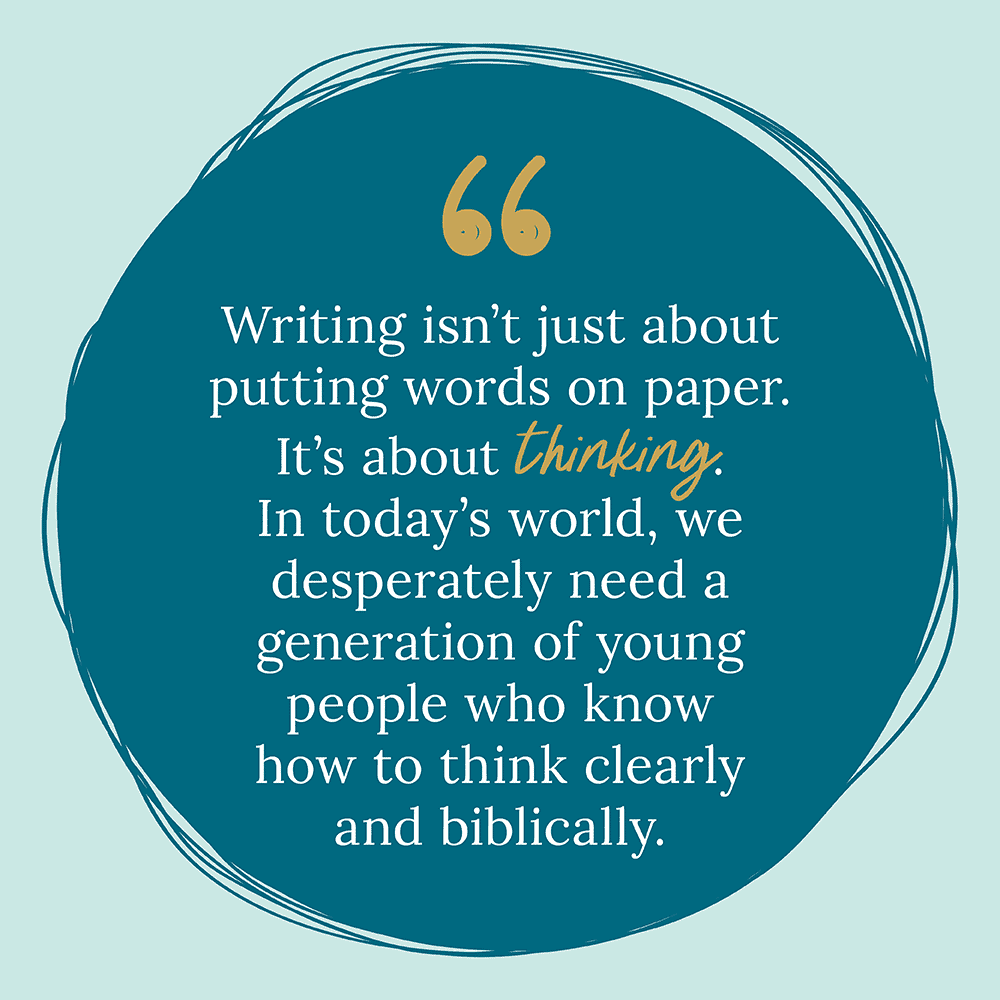
Writing isn’t just about putting words on paper. It’s about thinking. In today’s world, we desperately need a generation of young people who know how to think clearly and biblically.
A solid practical writing course teaches your teen to:
- Organize their thoughts logically
- Evaluate information
- Make a strong case for what they believe
- Discern truth from error
In a culture full of confusion, writing becomes a tool for discernment.
When your teen learns to write with purpose and structure, they’re also learning how to defend their faith, understand different perspectives, and respond with grace and truth. Writing helps them take what they know and communicate it in a way that brings light into the darkness.
Romans 12:2 calls us to be transformed by the renewing of our minds. Writing is one way we help our teens do that.
4. It Gives Teens a Voice Worth Using.
There’s no shortage of voices in our world today, but what our kids need is not just a louder voice. They need a true one. Teens need a voice that knows how to speak with grace and boldness. They need a voice that reflects the heart of Christ.
Practical writing skills for teens give them the confidence and practice to find that voice and use it well.
When my kids were younger, I made it a point to include them in homeschool conventions. They had opportunities to speak in front of groups, share their testimony, and explain what they believed. That experience built not just communication skills, but courage.
As they’ve stepped into college classes and young adult life, those skills have carried over. One of my daughters has already had to push back respectfully in classroom discussions when something clearly contradicted her faith. Because she had the tools to express herself clearly and thoughtfully, she was able to stand firm without being combative.
That’s the power of giving teens a voice worth using. We’re not just preparing them to win arguments; we’re preparing them to stand firm in truth and share it with compassion.
5. It Makes Writing Feel Relevant (Not Just Academic).
Let’s be honest. Most high schoolers aren’t excited about MLA format or analyzing 18th-century poetry.
But what if writing actually meant something to them?
That’s what practical writing does! It takes writing off the page and into real life. Teens are given assignments that feel purposeful: crafting a persuasive letter, writing a personal mission statement, drafting a speech, or creating a fictional scenario with real-world application.
When students see writing as something that matters, their whole attitude shifts. They begin to take ownership. They begin to enjoy it. Then they begin to see how God can use even their writing as a form of worship and service.
Instead of asking, “When will I ever use this?”, they start to say, “I can use this today.”
Ready to Equip Your Teen with Writing That Matters?
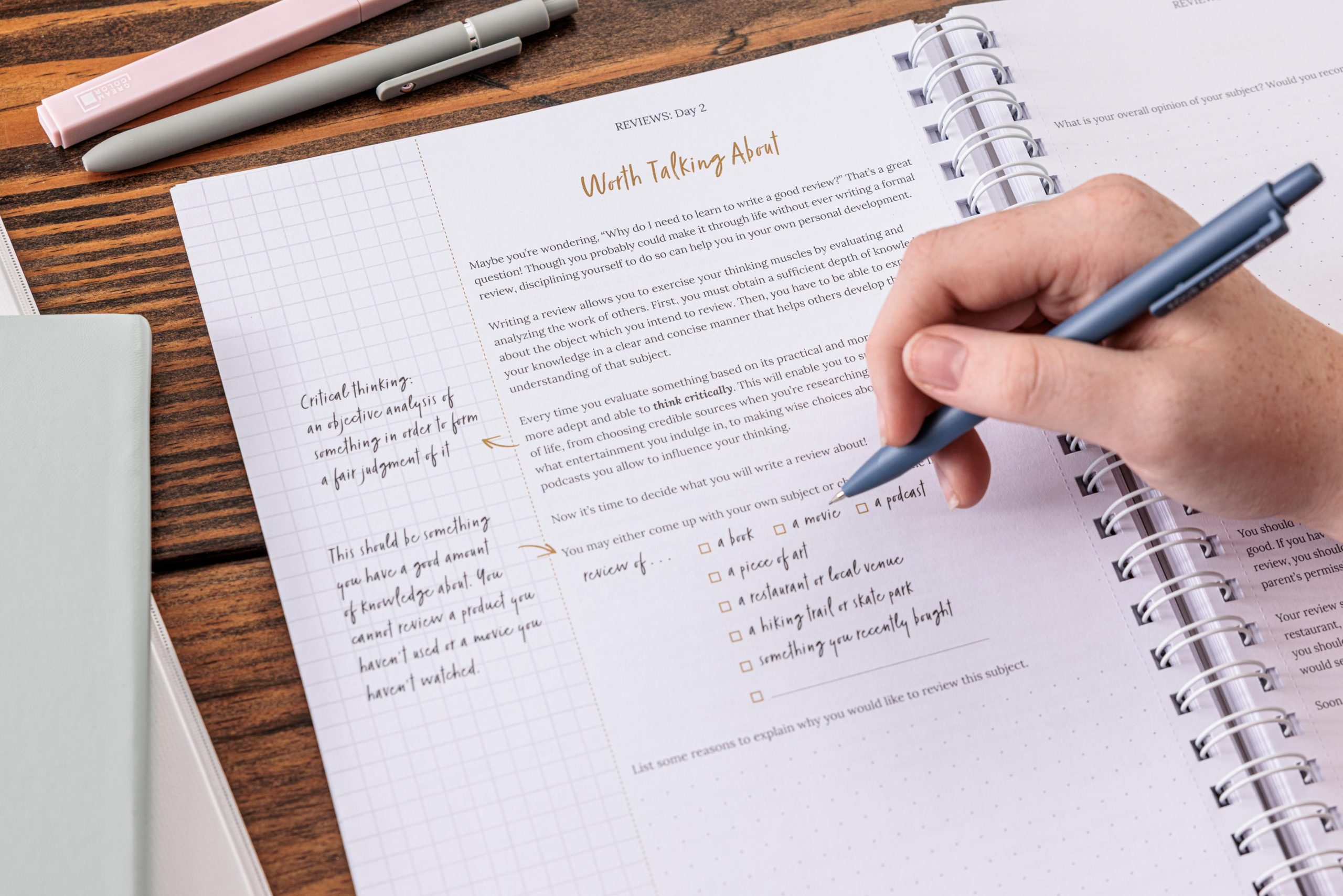
If you’re looking for a writing course that goes beyond grammar drills and actually prepares your teen for life, check out In Other Words.

This open-and-go curriculum covers everything from personal statements and persuasive essays to everyday communication, such as emails and social media, all through a biblical lens.
Your teen won’t just write papers. They’ll learn to think deeply, communicate clearly, and share truth with confidence.
When our kids learn to use their words well, they don’t just become good writers.
They become bold witnesses, clear thinkers, and faithful communicators.
That’s something this world—and the Church—desperately needs.

Through practical tools & Bible-based resources, Kim Sorgius is dedicated to helping your family GROW in faith so you can be Not Consumed by life’s struggles. Author of popular kid’s devotional Bible studies and practical homeschooling tools, Kim has a master’s degree in education and curriculum design coupled with over 2 decades of experience working with kids and teens. Above all, her most treasured job is mother and homeschool teacher of four amazing kiddos.