
How to Choose the Best Preschool Homeschool Curriculum


As a 22-year veteran homeschool mom and educator with a master’s degree in early childhood, these are my top picks for preschool homeschool curriculum. They might surprise you!
If you’re thinking about homeschooling your preschooler and feeling a bit lost in the sea of options, you’re definitely not alone. Maybe you’ve always planned to homeschool, or maybe recent events have pushed you in this direction. Either way, starting this journey can feel especially daunting when you have no previous homeschool experience to draw from.
The good news? You are already equipped by God to do this incredible job of homeschooling your kids. These early years truly are a treasure and I promise you, getting started isn’t nearly as complicated as all those curriculum websites make it seem.
With over 22 years of homeschool experience and a master’s degree in early childhood, I’d love to share what your preschooler actually needs to learn, as well as resources and curriculum that I’d recommend. Let’s get started.

Table of Contents
What is a good age to start homeschooling?
It’s NEVER too early to start homeschooling, but it’s possibly too early to use a traditional curriculum. What do I mean? Well, homeschooling is truly about educating the whole child. It’s not just about making sure your child can read and pass the ACT one day. It’s about preparing them for all facets of their life once they leave your home.
To truly educate a child is to educate them spiritually, emotionally, relationally, and academically. It’s about teaching them necessary skills for life (like brushing your teeth) just as much as it’s about teaching them to read. So naturally, it starts at birth. Just don’t sit your 6-month-old down with a pencil and some flash cards. It’s not necessary!
In this post, we will explore all the perfect preschool homeschool curricula for your three to five-year-old. You might be surprised by my answer!
How do you homeschool a preschooler?
Before we dig into the curriculum, there are a few things we need to determine.
- How eager is your preschooler to learn?
- How available are you to teach?
If you don’t answer these questions and choose a curriculum accordingly, you’ll find yourself frustrated and overwhelmed. For example, the mom with one eager-to-learn child is going to have a VERY different preschool homeschool curriculum than the mom with five other kids and an easily distracted learner.
No matter how interested your child is, the most important thing you can do is TAKE IT SLOW! 4 year olds do not need a giant stack of curriculum so tall that they can’t even peek over it. In fact, you might not even need a curriculum.
In the early years, ages 3, 4, and 5, I strongly encourage you to focus on laying a strong foundation for the basics: reading, writing, and math.

How to Teach a Preschooler to Read
There are three things you can do every single day to teach your preschooler to read:
- Read books aloud to them
- Talk about the books as you read them (point out rhyming words, letters, etc)
- Explore the world around you
Perhaps that seems oversimplified to you, but if you read any sentence in this post, may it be this one:
Learning to read is more about the experience with books than it is about the letters or words in that book.
Reading starts the moment your child touches their first book and typically spans many years. Just ignore all those people who say their child learned to read in 12 lessons or whatever silly marketing ploy the company taught them. That’s NOT the kind of reading you want.
Reading is a lifelong relationship with literature that develops slowly and involves many moving pieces. There are dozens of things we do as parents that lay the right foundation for learning to read. DON’T trade these natural things for a forced curriculum or an empty promise!
Don’t buy a reading curriculum for your preschooler!
I beg you NOT to buy a reading program for your preschooler. Wait until your child is ready before you begin formally teaching them to read. Spend the years between ages two and five laying an incredible foundation for the LOVE of reading instead of a rote calling of words on a page. You won’t regret it.
How to Teach a Preschooler to Write
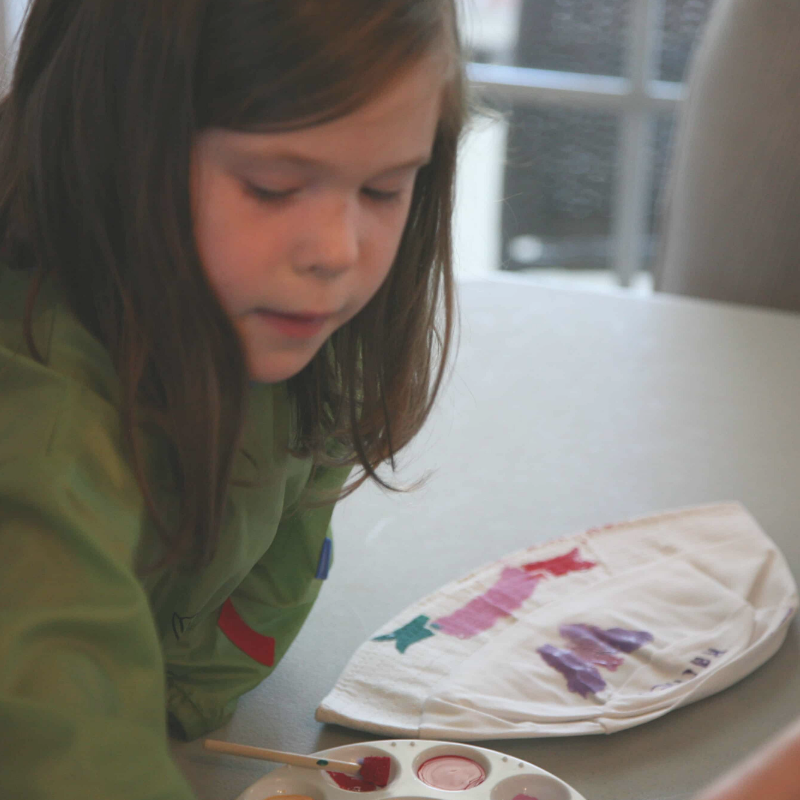
For writing, we will focus on handwriting. This is a great time to encourage free coloring and doodling. Allow them to explore colors, strokes, and paper. The more often kids are allowed to do this, the more opportunity they will have to get comfortable with the crayons and other writing tools.
PLEASE DO NOT buy those silly fat crayons. They are not better for little hands. Think about it….if a six-month-old can pick up a Cheerio, your three-year-old is able to handle a thin crayon or pencil. In fact, the fatter crayons can be difficult to maneuver.

FLIP CRAYONS: These crayons are my favorite for little hands, plus you can use them later to help teach writing skills.
I would not teach a formal homeschool handwriting curriculum at this age unless your child is asking for it. By asking, I literally mean, “Mommy, will you show me how to write this letter?” Otherwise, let them doodle! Most people may call this scribbling, but it’s great muscle and fine motor development and is how kids prepare to write. Encourage it!

How to Teach a Preschooler Math
At this age, you will want to focus on counting, subtracting, adding, and multiplying real things in your house. This happens naturally if you are engaged with your kids. (Ask your child to divide the cookies evenly among her siblings.) Use the real math terms—divide, multiply, etc. to introduce them to the terms they’ll need in the future.
The main goals at this stage are to learn:
- Shapes
- Number Recognition
- How to talk about things in mathematical terms
I prefer for my kids to learn things naturally as a part of a unit study, so when math comes up in our learning, we cover it. This kind of real-life learning is practical, and it makes sense to kids because it’s connected to what they are already doing. Math worksheets don’t offer that super power. So, skip the math curriculum for now.
Bible curriculum for preschoolers
Even when they can’t quite read, kids can learn important truths about God and how He instructs His children. The preschool years are a great time to begin building this habit.
Look for short Bible studies you can read aloud to your child, but make sure these studies take you back to the Bible. I’m not a big fan of paraphrased storybook Bibles. They are watered down and often not accurate. Instead, just break it down by reading little bits of God’s Word straight from your own Bible.
At Not Consumed, our goal is to get kids into God’s Word in an effective yet fun way. Our Bible studies teach a wide variety of topics, including sibling relationships, the power of our words, contentment, the guarding of our hearts, and more!
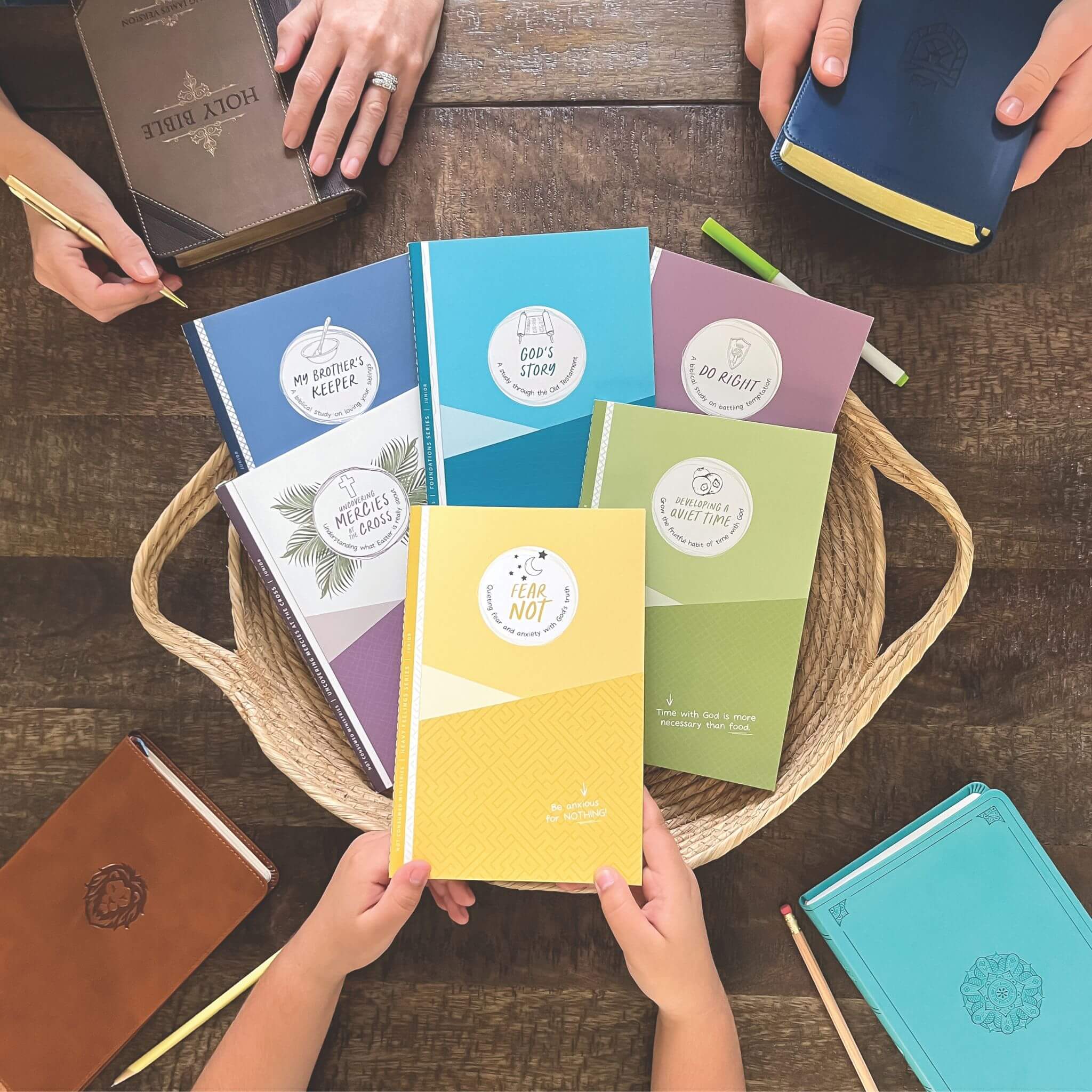
Our goal is to get kids into God’s Word in an effective yet fun way. We hope to equip kids with the tools they need for a lifetime of engagement with the Bible.
We have Bible studies for all age levels, including preschoolers! You and your preschooler can dive into God’s Word in a simple yet powerful way. Each day’s lesson prompts you to go straight to the Bible, so your preschooler begins to develop this habit early.

A Typical Preschool Homeschool Schedule
I’m a big fan of block scheduling and routines. When you break your day into 15-minute increments and label each one with a task, you’ll find yourself constantly frustrated with interruptions and unexpected messes.
Instead, we chunk our day into manageable pieces: morning, school, lunch, afternoon, and dinner. You can read more detailed info about our overall homeschool schedule here. For this post, I’ll stick with a few specifics for preschoolers.
Morning Schedule Chunk
In our home, the morning chunk has three specific goals:
- To teach good habits
- To teach basic life skills
- To get the day off to a good start
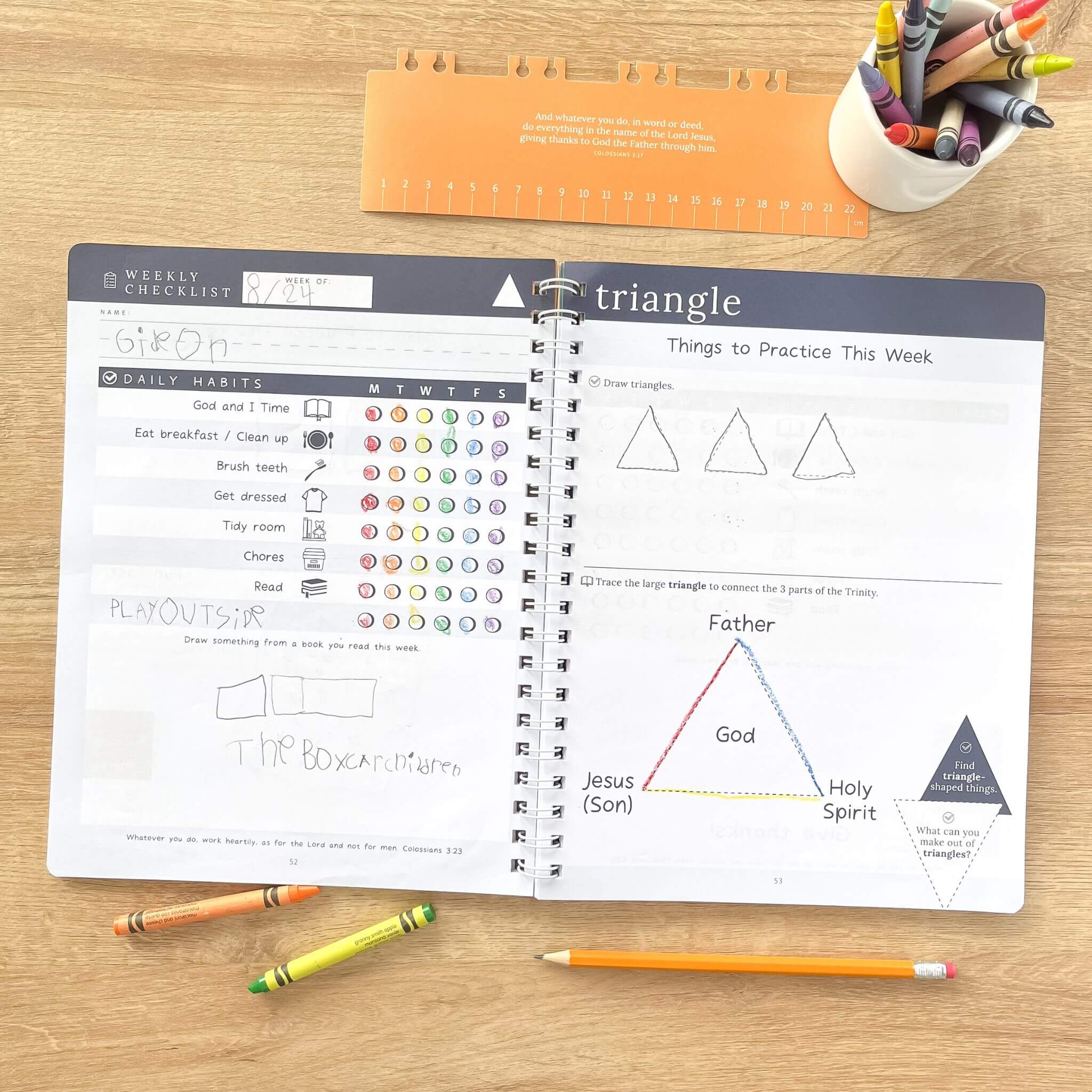
In preschool, I start the kids with a morning checklist. We do this together! The checklist walks us through those basic good habits and life skills so we can build on them as the kiddos grow. This checklist can be found in our Primary Homeschool Planner, your secret weapon for stress-free homeschooling success!
Once the morning habits are done, my preschooler sits with their book box until we are ready to start school as a family. When you have older kids or other responsibilities, the book box is a GREAT tool for being able to manage everyone for undetermined amounts of time. You never know how fast each kid will work through their morning lists. Plus, reading through the books on their own (which is called picture reading since they can’t read the words yet) is a foundational skill to learning to actually read those words. So don’t skip it!
School Schedule Chunk
The focus during this time is high-quality educational activities. If you have older kids, you’ll probably need to spend some time teaching them to read or working with them, too. Instead of a moment-by-moment schedule, try a routine.
- Morning Meeting: We start our day together as a family. We pray together and talk about what God has been teaching us in our quiet time. This is a GREAT way to encourage older kids to be consistent with their habits because they know you will ask what they’ve been learning! Next, we pray together and then work through a topic together, like Faithipedia. This is a flipbook full of apologetics. It’s all of those things you want your kids to know about the faith, like theology words, the Bible timeline, and names of God put together in one easy-to-use resource. We work through this as a family and then share any important announcements for the day before beginning to work on our school.
- TABLE TIME with the little people. If I’m doing a read-aloud or a curriculum with my preschoolers, I typically start with them. Older kids can get started on basics without you, but the little guys will just get into trouble! But be mindful of the time- 10-15 minutes is ideal, 20 minutes if they are super engaged. Try not to go beyond that.
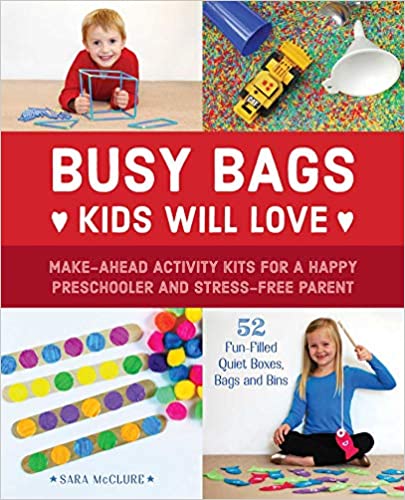
- BUSY BAG time: Next, I bring out the busy bags. A busy bag is a learning activity you can do at home. These are hands-on and so much fun! Busy bags keep preschoolers engaged while you work with older kids or complete needed duties around the house. Most preschoolers will go for about an hour with these, especially if they have options. When my kids were little, I had 5 boxes of busy bags, one for each day of the week.
- CENTER time: Taken from the old preschool classroom, our educational time ends with centers. Basically, these are little stations I set up with activities for my preschoolers to do. This might be busy bags, or it could be something like a sand table or puzzle. I print and laminate the numbers 1-3 and put them in the area with the activity. Then, the preschooler cycles through the activities while I’m working with other kiddos on school, folding laundry, etc. Independent learning time is REALLY important, so don’t skip this. It’s a great way to train them to play, explore, and solve problems on their own.
Afternoon Schedule Chunk
After lunch is our favorite part of the day. Typically, my kids have about one hour of free play (which is sometimes turned into errands).
- Family read-aloud is something we do every day during the lunch hour. I choose all kinds of things to read together while the kids are eating lunch or coloring/doodling at the table.
- Preschool BOOK BOX Time: After lunch, we come back to book box time. My kids have had their own personal book boxes from age three to high school. These are books I’ve selected that are high-quality, wholesome, and engaging. Giving them several in a box allows them to choose and not feel BOXED in. I set the timer and require 15-30 minutes for this box, depending on age. At first, they won’t sit with the books long, so be patient and work your way up from five minutes. Sometimes, younger preschoolers will fall asleep while doing this- no problem! It’s a great segway into naptime.
- Free play with toys or outside (Be sure your child has lots of open-ended toys that build intelligence, like blocks or building cubes.)
- Quiet time is non-negotiable in our house. Even my high schoolers have it. Everyone needs downtime. Naps are always a preschooler’s friend, but this time also might be filled with audiobooks, their book box, or quiet toys in their room.
- Free play again. Typically, my kids have more free play before dinner time, too outside if the weather permits, or inside with toys and fun things.
What About a Preschool Curriculum.
Honestly, you’d be totally fine without one. Just work with your child as learning opportunities arise. I think preschoolers and kindergarteners should take LOTS of field trips to explore the world around them. That’s what we did. I developed simple unit studies to go along with our adventures. VERY simple.
But I know that doesn’t always work for families. Sometimes, mom is too busy to come up with ideas, and sometimes, the ideas just won’t come. I’m excited to share with you one of my favorite things ever– All Around Town.

My daughter Leah and I developed this preschool curriculum, with a focus on pre-k learners, together with our team of expert homeschool moms and educators.
Let me tell you, this one is such a lifesaver for new homeschool parents because it’s completely open-and-go. No staying up until midnight cutting out little pieces or scrambling for supplies!
What I love about All Around Town is how it connects everything to real life. Instead of random worksheets, your kiddo gets to explore places they’re actually curious about – like the post office, fire station, and grocery store. My son would get so excited when we’d visit these places in real life after learning about them!
It covers all the basics – literacy, math, science – but in ways that make sense to preschoolers. Like counting grocery items or matching letters to street signs. And it weaves in biblical connections, too, helping little ones see how God is part of their everyday world.
The kit includes:
- Student book– This book guides students through 20 weeks of field trips. That’s a full-year of engaging lessons and interactive learning. You’ll find parent pages to help you connect the field trips with a biblical worldview, follow-up pages, and even dramatic play ideas.
- Reusable Sticker Book –contains stickers and scene pages that enhance creativity and interactive storytelling. This is great for dramatic play, too.
- Matching Game – reinforces key ideas from each trip
- Sticker Map – tracks learning adventures as you complete them
- Backpack – This is perfectly sized for your field trip adventure!
We don’t overstuff their days. Around Town is gentle and meant to be fluid with your schedule. Yes, I know some curriculum lasts 36 weeks. Don’t do this to yourself. You need time to celebrate holidays and birthdays and even have sick days. 20 weeks is the perfect number! Don’t overstuff your days! See a full video and learn more on our YouTube channel.
We reinforce skills with the Primary Planner A. It’s a beginner-friendly planner to introduce organization skills and habit-building, as well as provide practice for early learning skills. This is how we start our mornings and learn to develop those habits.

By the way, the Primary Planner A also has 3 assessments to help you track your child’s progress. One for the beginning of the year, one for the middle, and one for the end. This will help you to see the math, literacy, and social skills your child is learning naturally!
What does a preschooler need to learn?
I’ve given you quite a bit in this post, but I want to leave you with one final thought. It’s easy to get so caught up in curriculum and requirements that we forget to keep our vision in mind. Ultimately, who do you want your sweet baby to be when they are 18 and leave the home?

Those are the things you need to teach them. This includes reading and math, but in our home, the focus is on spiritual growth and developing the life skills they will need when they leave home!
Remember, these preschool years are precious. Don’t get so caught up in “doing school” that you miss the joy of learning alongside your little one.
Homeschool Preschool Tips, Tricks, & Curriculum Ideas
For more homeschool preschool ideas and practical tips, watch this video. We’ve created it to give you a short glimpse into some of our favorites.
More Christian Homeschool Curriculum
Using my expertise as a certified educator and 12+ years of homeschooling, we’ve created a comprehensive list of the BEST Christian homeschool curriculum for each grade level. You’ll find each of them linked below.
- Preschool Homeschool Curriculum
- Kindergarten Homeschool Curriculum
- First Grade Homeschool Curriculum
- Second Grade Homeschool Curriculum
- Third Grade Homeschool Curriculum
- Fourth Grade Homeschool Curriculum
- Fifth Grade Homeschool Curriculum
- Sixth Grade Homeschool Curriculum
- Seventh Grade Homeschool Curriculum
- Eighth Grade Homeschool Curriculum
- High School Homeschool Curriculum
Still stuggling to see how everything fits together? Get a better overall vision for Christian homeschool curriculum in this post.

Through practical tools & Bible-based resources, Kim Sorgius is dedicated to helping your family GROW in faith so you can be Not Consumed by life’s struggles. Author of popular kid’s devotional Bible studies and practical homeschooling tools, Kim has a master’s degree in education and curriculum design coupled with over 2 decades of experience working with kids and teens. Above all, her most treasured job is mother and homeschool teacher of four amazing kiddos.



Where can I find the primary assessment printout?? I’m missing it somehow
Hi Bethany,
You can find our Primary Assessment Pack here: https://store.notconsumed.com/products/primary-assessment-pack
Suzanne@NotConsumed
What if my 3 year old is really interested in and asking to read? She has all the reading readiness markers except she is still learning her ABC’s should I start her on a reading curriculum when we have that down or wait?