
5 Things I Stopped Doing in Our Homeschool (and What I Do Instead)

I used to do a lot of things in our homeschool that I thought were absolutely necessary. Like, non-negotiable, write-it-in-stone, this-is-how-you-do-it kind of necessary. Then after a few years of doing them, I realized they weren’t helping us at all. In some cases, they were actually making things worse.
I say that as someone who has been homeschooling for more than 20 years, with a master’s degree in education and curriculum design, three graduates, and one high schooler still at home. When I tell you I’ve made mistakes, I mean I have a highlight reel. And I wouldn’t have it any other way, because every one of them taught me something worth passing on.
So today I’m sharing five things I completely stopped doing in our homeschool and what I do instead. Some of these might surprise you. A couple of them might even make you feel relieved. And if you’re in your first few years of homeschooling, this list might save you a whole lot of unnecessary stress.
Would you rather watch than read? You can watch the full video here.
1. I Stopped Hovering Over My Kids
When I first started homeschooling, I sat right next to my kids for every single subject. Every. Single. One. I watched them write every letter. I corrected every mistake in real time.
And you know what happened? My kids couldn’t do anything without me. Not because they weren’t capable, but because I had trained them to wait for me before they moved forward. I had accidentally created little humans who needed my approval before they turned the page.
Every time I jumped in to fix something or hovered while they worked through a problem, I was sending this message: “You can’t do this without me.” I didn’t mean to send that message, but that’s what they were receiving.
So what do I do instead? I teach independent learning. And before you picture me just handing my kids a stack of books and walking away, that is not what this is. Independent learning is a process. You build it gradually. You start with clear expectations, a checklist, and short stretches of independent work. Then you grow it from there.
My kids use a student planner that lays out exactly what they need to do each day. They work through their checklist on their own, and I check in after. Not during. After. That’s the key. I’m still involved. I’m still checking their work and holding them accountable. But I’m not sitting there narrating every step.
This one change gave my kids confidence, gave me breathing room, and honestly saved our homeschool. If you want the step-by-step version, I have a whole three-part series on how to set up independent learning in your home.
2. I Stopped Using a Plan Book
I used to be that mom with the gorgeous plan book. Color-coded. Washi tape on the edges. Every subject written in its perfect little box for every day of the week. It was a work of art. I should have framed it and hung it on the wall, because that would have been a better use of my time than actually trying to follow it.
I’d spend my Sunday night carefully filling in every box. Math, page 42. Science, chapter 3. Spelling, list 12. Beautiful. Then Monday would come. Someone would get sick. The baby would have a meltdown. We’d get a late start. By Wednesday, the whole page looked like a crime scene of eraser marks and crossed-out plans. Most weeks I’d given up entirely and was just winging it.
I was the only one looking at that plan book. My kids had no idea what was in it. They didn’t know what they were supposed to do each day unless I told them. Which meant I was basically a human announcement system. “Okay, now it’s time for math. Okay, now get your science book. No, not that one. The other one. The blue one. No, the other blue one.”
I was doing all the planning, tracking, and managing while my kids waited for me to tell them what came next. Sound familiar?
Give the Plan to Your Kids
So what do I do instead? I gave the responsibility to my kids. Each of my kids has a student planner with a weekly checklist inside. At the beginning of the year, I write down what curriculum we’re using for each subject in the front of the planner. That’s it. That’s my planning. I do it once, in the summer, and I don’t touch a plan book again for the rest of the year.
From there, my kids just do the next thing. They open their planner, look at their checklist, and write down what they did. Math lesson 10 on Monday. Lesson 11 on Tuesday. Lesson 12 on Wednesday. They’re recording what they accomplished, not following a schedule I wrote for them. And that is a huge difference.
If someone gets sick on Thursday, nobody panics. Nobody has to erase anything. Nobody has to replan. The planner just sits there, patient as a saint, waiting for the next day you write something in it. You pick up right where you left off. Lesson 13. Done.
My kids started taking ownership of their school day. When they’re the ones writing down what they’ve done, they can see their own progress. They can see themselves moving forward. That’s way more motivating than me hovering over a plan book and telling them what to do next.
The plan book was making me feel productive, but it wasn’t actually making us productive. The student planner did both. We have one for every age group, pre-K through high school.
3. I Stopped Making School Take All Day
If your elementary-aged kids are doing school for six hours a day, something needs to change.
When I was a classroom teacher, we had a full school day because we had 25 kids, transitions between classrooms, assemblies, lunch lines, recess schedules, and about a thousand interruptions. That’s why school takes all day in a traditional setting. It’s not because the actual instruction requires that much time. It’s because the system requires that much time.
You don’t have that system. You’re at your kitchen table, a kid, and a math book. You can cover in 20 minutes what a classroom covers in an hour or even two. So let yourself do that.
I stopped padding our school day with busywork just to make it feel long enough. I stopped assigning every single problem on the page just because the book told me to. And I stopped feeling guilty when we were done by lunch.
What do I do instead? We focus on quality over quantity. More is not better. It’s just more.
My elementary kids rarely spent more than two hours on formal schoolwork. Even my middle and high schoolers usually finished in about four hours or less. If a concept clicks after ten practice problems, we don’t need to do thirty. If they’ve mastered the skill, we move on.
With the extra time, my kids played outside. They read for fun. They pursued hobbies and interests that turned into real passions. To be honest, this is where all of the best learning happened.
4. I Stopped Buying Curriculum That Didn’t Match My Worldview
I wish someone had told me this in year one, but I had to learn it the hard way.
Years ago, I picked up a very popular history curriculum. It was one of those beautiful, storybook-style programs that everyone was raving about. I thought I had hit the jackpot.
But as we worked through it, something kept nagging at me. I couldn’t quite put my finger on it, but it felt like something was missing. The stories were well written, sure, but the way they told the history of the world just didn’t sit right with me. So one day I did some digging. I looked up the author and found that she was very clear, in her own words, that this curriculum was not intended to be Christian or have a Christian point of view.
I sat there staring at my screen thinking, what? How can you tell the story of the entire human race without God? That’s not neutral. That’s atheism. And it will not be tolerated in my home. I closed the book, threw it away, and vowed right then that I would never let that happen again.
Everything has a worldview. Every textbook, every curriculum, every program. It might say it’s neutral, but nothing is neutral. The Bible makes that pretty clear. And if I’m going to spend years pouring content into my children, I need to know what that content is actually saying.
Make Worldview Your First Filter
So what do I do instead? Before I buy anything, I ask one question first. Does this match our worldview? That’s the most important filter. Not “Is it rigorous?” Not “Is it popular?” Not “Did my friend love it?” Does it match what we believe and what we want to teach our children about God, about the world, about truth?
And I’ll be honest, sometimes that means passing on curriculum that looks amazing. The design is beautiful. The reviews are glowing. Everyone at the convention is raving about it. But if the worldview doesn’t match, it doesn’t come home with us.
Now, that doesn’t mean we avoid hard topics. We absolutely teach things like evolution in our home. But we teach our kids why we disagree with it. We don’t hide from it. I keep a Sharpie handy and we mark right through incorrect information and write the truth next to it. My kids have been doing this since they were young, and it’s taught them to think critically about everything they read. That’s a skill that will serve them for the rest of their lives.
Avoidance is actually one of the reasons kids walk away from their faith when they get older. They get to college and hear these ideas for the first time, and they think their parents just didn’t know. I’d rather my kids hear it from me first, with truth right alongside it.
5. I Stopped Using Worksheets
There was a season in our homeschool where I was basically running a paper factory. Worksheets everywhere. The kitchen table looked like a tax preparer’s office in April. My kids were filling out sheets for math, sheets for grammar, sheets for spelling, sheets for reading comprehension, and I’m pretty sure at one point I had a worksheet about worksheets. I’m kidding. But barely.
And I felt so productive. Look at all this paper! Look at all this learning! Except we weren’t. My kids were filling in blanks and circling answers like little robots. They could tell me they finished. They could not tell me what they learned. Those are two very different things.
One afternoon, my daughter filled out an entire worksheet about the water cycle. When she was done, I pointed at the rain outside and said, “Hey, that’s the water cycle.” She looked at me like I had just blown her mind. Ma’am, you literally just filled out a worksheet about this. But it didn’t connect, because it was just words on a page. It wasn’t real to her.
That was my wake-up call.
Let the Experience Come First
So what do I do instead? The written work supports the real experience, it doesn’t replace it. When we study the water cycle, we start with an experiment on the kitchen counter. We watch condensation form. We talk about what’s happening and why. Then we create a diagram together. Now that diagram actually means something, because they’ve seen it with their own eyes.
The same thing works with plant parts. We can go outside, examine a real plant, and then come inside and draw what we saw.
When one of my kids got into birds, we grabbed binoculars, went on nature walks, kept a field journal, and built a bird feeder. He was learning science, writing, math, and geography all from one interest. He just didn’t realize it, because he was having too much fun.
Why We Build Curriculum This Way
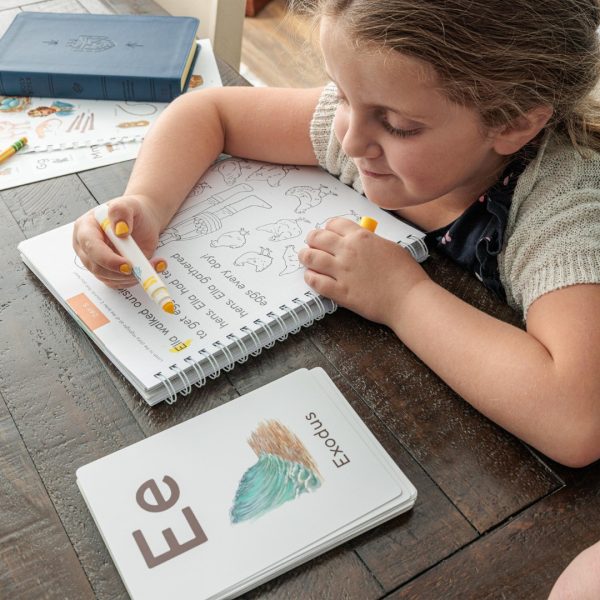
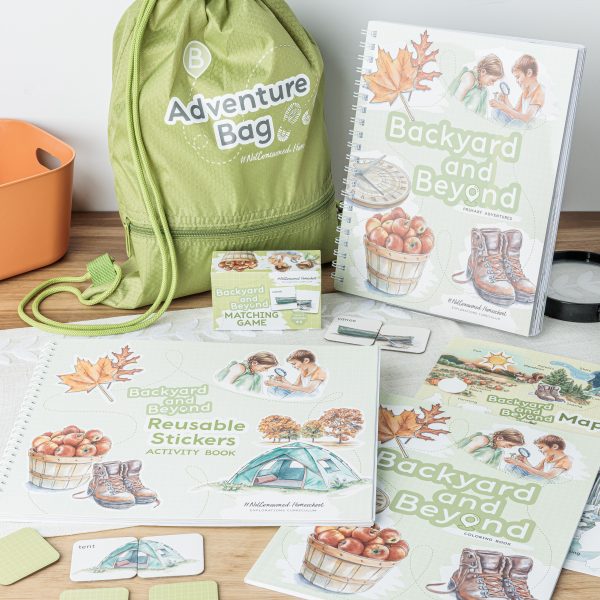
That’s exactly why we created our curriculum the way we did. Backyard and Beyond gets kids outside exploring nature, and the pages help them connect the dots. Beginnings and Connections starts with letter tiles kids can touch and move around, and the written work supports what they already practiced out loud. The pages matter. They just don’t carry the whole lesson by themselves.
All of our primary curriculum is based on hands-on discovery experiences and field trips, from pre-K all the way through elementary school. You can see the whole curriculum collection here.
Start With Just One
So those are my five. I stopped hovering over my kids. I stopped using a plan book. I stopped filling the whole day with school. I stopped buying curriculum that didn’t match my worldview. And I stopped letting worksheets be the learning.
You don’t have to change everything at once. Pick one. Try it for a week. See how it feels.
If you’re wondering which one to try first, start with the student planner. It’s the change that made every other change possible in our home. When your kids can see their own checklist and track their own progress, the hovering, the plan book, and the all-day school schedule start solving themselves. We have a planner for every age group, pre-K through high school, and I would love for you to see what happens when your kids start owning their school day.
Leave me a comment below. Which one of these do you need to stop doing?

Through practical tools & Bible-based resources, Kim Sorgius is dedicated to helping your family GROW in faith so you can be Not Consumed by life’s struggles. Author of popular kid’s devotional Bible studies and practical homeschooling tools, Kim has a master’s degree in education and curriculum design coupled with over 2 decades of experience working with kids and teens. Above all, her most treasured job is mother and homeschool teacher of four amazing kiddos.