
Should My Homeschooled Teen Take Art Appreciation?
Is art even worth my teen’s time?
That’s a question many Christian parents wrestle with at some point.
When mapping out a plan for high school, there are a lot of things to juggle. Credits, time, subjects, and hopefully your teen’s interests. Math, science, writing, history—all the core subjects—naturally take the lead. Electives usually get weighed more carefully, more curated for a teen’s education plan.
Art appreciation can often be overlooked when planning high school credits, which is unfortunate. When taught with intention and structure, and treated as more than just a creative outlet, art appreciation is a fantastic choice for a teen.
Studying art teaches teens how to slow down and pay attention.
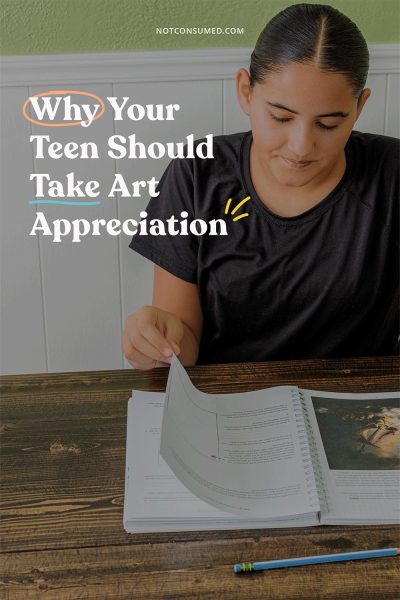
Most teens move quickly from one thing to the next. They skim, scroll, react, and move on, whether they’re reading a book, looking at a screen, or interacting with things in the real world. Art asks them to do the opposite. It requires them to stop, look carefully, notice details, and sit with what they’re seeing—long enough to form a thoughtful response.
This skill matters beyond an art credit! It carries over to reading complex texts, writing clearly, evaluating ideas, and even engaging thoughtfully with their faith instead of responding emotionally or superficially.
It also gives your teens a place to see theology in action, not just in theory.
Back when the majority of people couldn’t read, truth was communicated visually. Symbolism, composition, light, contrast, and story helped communicate theological truth. Art has always reflected what people believe about God, humanity, suffering, hope, power, and redemption.
When teens learn to study art carefully, they begin to recognize those beliefs. They learn to ask what an image is saying about the world, about people, and about truth—and then to compare those ideas with what Scripture teaches.
That comparison is where discernment begins.
Though I firmly believe that every Christian teen should be able to recognize, study, and understand classic works of art, there are three specific works that I especially think should not be overlooked. Not because they’re a piece of art history (even though they absolutely are), but because they are clear examples of how art can help students practice careful observation, think theologically, and develop discernment in a natural, approachable way.
Check out this video to see what those artworks are!
Studying, understanding, and appreciating art is a valuable skill that will benefit your teen throughout their life. It’s a valuable fine arts elective that serves a practical purpose. Especially because most parents aren’t looking to turn their teenager into an artist.
Most parents are looking for a fine-arts elective that teaches their teen something. Something that stretches their thinking, fits into a Christian high school plan, and doesn’t feel like filler.
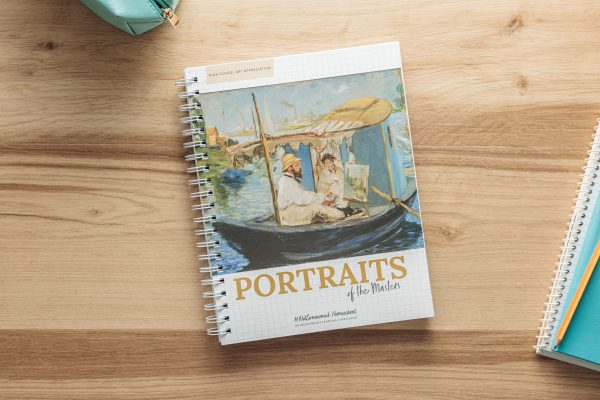
That’s exactly why we created Portraits of the Masters.
This art appreciation course isn’t about memorizing dates, styles, or artist names for trivia’s sake. It’s designed to teach teens how to observe carefully, think clearly, and evaluate meaning. These skills are applicable outside of art evaluation, too, preparing your teen to think logically and critically as they enter adulthood.
In Portraits of the Masters, students don’t rush through dozens of images. Instead, they slow down and spend time with carefully selected works. They’re taught how to notice details, recognize symbolism, and ask good questions about what an artwork is communicating.
And, most importantly, they’re taught how to compare that message with a biblical worldview.
Each lesson includes guided observation, thoughtful discussion questions, and written reflection. Teens aren’t told what to think—but they are taught how to think. They learn how artists use composition, light, posture, and placement to communicate meaning. Over time, they begin to recognize when art aligns with truth, when it distorts it, and when it reflects a broken or incomplete view of the world.
This is invaluable for high schoolers! Whether we like it or not, our teens are already swimming in images, from film to advertising, media to social platforms. Portraits of the Masters gives them the tools to engage visually with discernment instead of passivity.
From a practical standpoint, this course is structured, academically solid, and works naturally as a high school fine-arts credit. It doesn’t require an art background, and it fits alongside math, science, and writing without overwhelming the schedule.
And because the course focuses on appreciation and analysis—not production—students who don’t consider themselves “artistic” can still succeed and enjoy it!
Portraits of the Masters also helps teens see that faith isn’t something we turn on for Bible class and off for the rest of life. Beliefs show up everywhere—including in art. Christianity isn’t afraid of beauty, complexity, or thoughtful questions. It invites careful engagement rooted in truth.
If you’ve been looking for a fine arts elective that feels worth the time, that treats your teen like a thinker, and that fits naturally into a Christian high school plan, this course was created for you.And, whether or not you decide to have your teen use Portraits of the Masters, I hope you walk away with a new appreciation for art’s importance. It trains the eye, trains the mind, and when approached with intention, it can also train the heart!

An avid reader of literature, Arden loves using words and stories to communicate the truth, beauty, and goodness of God. She has been writing for fun since she could reach a keyboard but has over a decade of writing experience in the professional sphere. With eight years of children’s ministry, three in youth ministry, and five years in young adult ministry, Arden also values making God’s Word understandable and accessible to the entire family, no matter what season of life.