How My Daughter Graduated High School and College at the Same Time (Dual Enrollment)

My daughter Rachel walked across the stage and received her high school diploma and her college degree on the same timeline.
Not because she’s some kind of genius. Not because we had a master plan from the time she was five. But because we took advantage of something called dual enrollment, and it changed the entire trajectory of her high school experience.
And Rachel wasn’t the only one. My daughter Leah took a different path. Between dual enrollment classes and CLEP testing, she earned several semesters of college credit without ever sitting in a traditional classroom.
Both of their paths looked different, but neither one required some kind of genius. I’ve graduated three kids in over 22 years of homeschooling, my master’s degree is in education and curriculum design, and I’ve learned that the secret isn’t having an exceptionally gifted kid.
It was planning.
So if you’ve heard the terms dual enrollment and CLEP but you’re not sure what they mean or whether your kid is ready or not, here’s exactly how both work and how to start planning now, even if your kid is only 11.
Rather watch the video? Check it out here:
What Is Dual Enrollment?
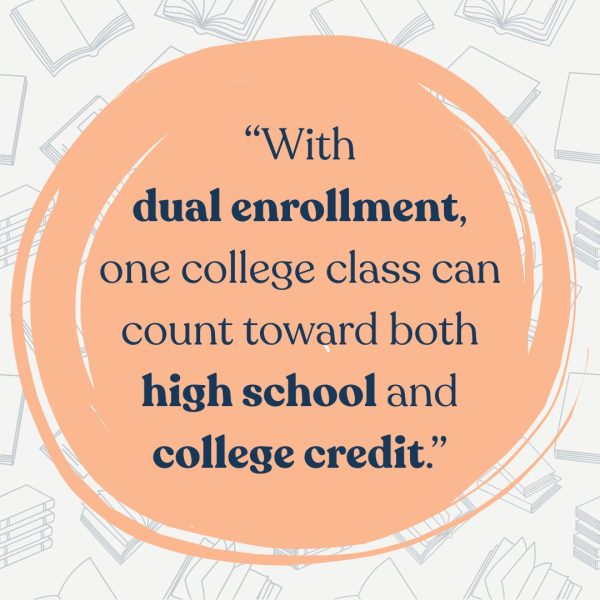
Dual enrollment simply means your high schooler takes college classes while still in high school. The “dual” part means the classes count for both. Your student earns high school credit and college credit at the same time. One class, two birds.
Your student might take classes at a local community college or university, online through an accredited college, or a combination of both. It depends on what’s available in your area and what fits your student’s goals.
This is important for you to know before I tell you more. Dual enrollment classes taken before 11th grade do not count. Even if your student is academically ready at 14, you need to wait until junior year for those credits to apply. Don’t rush it.
The good news? Many community colleges and universities let high schoolers take classes for free or at a significantly reduced rate. Leah’s first class was completely free, and even the ones we paid for cost a fraction of regular tuition.
But the real power of dual enrollment isn’t just saving money. It’s giving your student a head start on their future while they’re still in the safety net of your home.
What Is CLEP Testing?
CLEP stands for College-Level Examination Program. It’s a test that lets your student prove they already know the material for a college course. If they pass, they earn college credit without ever taking the class. No tuition. No semester-long commitment. Just a test.
This is how I personally started college as a sophomore. Between dual enrollment classes and CLEP tests, I wiped out all of my general education requirements. Every single one.
Any student can pay for a CLEP test and take it at a local testing center, and there are prep books and websites to help them get ready. Even better, you can earn partial credit. Math is not my strongest subject, but I still earned 3 of the 6 credits I needed from one test. That’s half my math requirement handled.
My recommendation? Start with your student’s strong subjects. If they’ve studied a subject thoroughly through high school, CLEP testing gives them a chance to prove what they already know.
How This Worked for Our Family
Rachel is my creative child, drawn to dramatic production. Stage design, makeup, wigs, lighting, all the behind-the-scenes work. For her junior and senior year, she enrolled in a college-level dramatic production program while completing her gen ed requirements online through Liberty University. By the time she finished her senior year of high school, she had also completed her college degree. Same timeline. No extra years. No massive student debt. It took real planning, but it was absolutely doable.
Leah’s path looked completely different, and that’s the beauty of it. It doesn’t have to be all or nothing. She started with a free speech class at our local university. Speech is really hard to teach at home, and it’s a gen ed requirement almost everywhere, so it checked both boxes. Then she took a math class that doubled for credit. It counted as her high school math credit and her college math credit at the same time. She also took an education class to test-drive a career idea, and it helped her realize education wasn’t her path before she committed to an entire degree. On top of that, she passed the English and History CLEP tests.
That’s what I love most about combining these tools. It’s not just about getting ahead. It’s about giving your student a chance to explore and to prove what they already know, without the full financial weight of college.
The Best Classes to Take (and Which Ones to CLEP)
Don’t just grab whatever sounds interesting. Be strategic. You want to focus on general education requirements, the classes every college student has to take regardless of their major. If your student can knock some of those out during high school, they’re walking into college already ahead.
Best classes for dual enrollment
- English composition: required almost everywhere, and a great starting point for strong writers
- College algebra: required across the board, and it can double as a high school math credit
- Speech: hard to replicate at home, required at most colleges
- A lab science: knocks out a high school science credit and a college gen ed at once
Classes that need hands-on interaction, like speech or a lab, are better as dual enrollment than CLEP. You want the actual classroom experience.
Best subjects for CLEP testing
- Intro to psychology: commonly required, genuinely interesting, and one of the easier tests to pass
- History: you’ve been teaching this at home for years, so let them prove it
- English literature: readers who’ve covered the major works do really well here
- Any subject your student is already strong in: that’s the real rule
One key for both: before your student enrolls in anything or sits for a test, look up the general ed requirements at the colleges they might attend and make sure the credit will actually transfer. Don’t assume. Verify.
Your Roadmap by Age
Ages 11 to 13
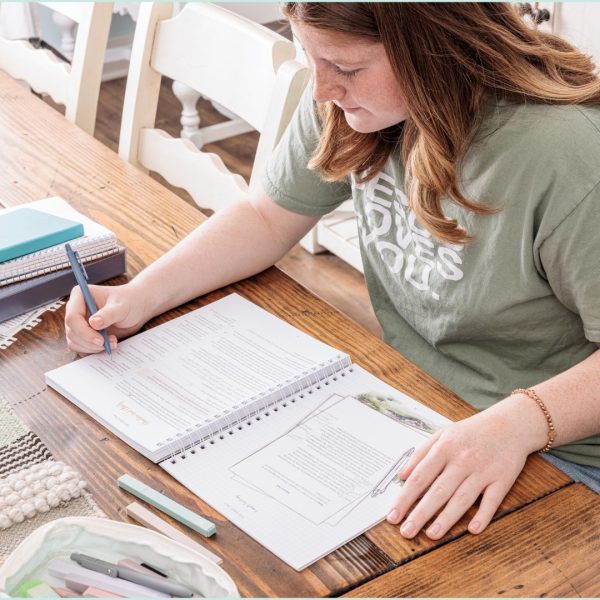
Build the foundation. Strong reading, solid math, good study habits. Watch what lights your child up, and start casual conversations about interests and career paths. This is also the time to build independence, because in a few years they’ll need to manage their own assignments and deadlines. A student planner is great for building that skill set early.
Ages 14 to 15
Research and prepare. Look up your local community college’s dual enrollment program: classes, cost, eligibility, whether the first class is free. Pull the gen ed requirements for colleges your student might attend and build your plan around them. Keep strengthening the subjects they’ll test or enroll in, and pick up a CLEP prep book so the format isn’t a mystery. But don’t enroll yet. Classes before 11th grade typically won’t count.
Ages 16 to 18
This is when it happens. Start with one dual enrollment class to get their feet wet, and have them take their first CLEP test in their strongest subject. A pass on the first attempt builds confidence. If they handle it well and want more, let them. Rachel was doing a full program by senior year, but every kid is different. And document everything carefully. Our free high school transcript template will help you keep it all straight.
Things to Watch Out For
- Credits don’t always transfer: check with the colleges your student is considering before they take a class or test, especially private or out-of-state schools.
- Timing matters: classes before 11th grade often don’t count, so don’t waste money on credits that won’t apply.
- Don’t push weak subjects: college-level work belongs in your student’s strengths, not the areas where they’re still building foundations.
- Be careful with gap years: some credits may not carry over if your student waits to start college, so do your homework first.
- You don’t have to do this at all: my son Nathan skipped dual enrollment entirely, finished early, and spent his senior year touring with a theater company. That was the right path for him. Yours might look completely different, and that’s more than okay.
Two of the Best Tools in Your Homeschool Toolbox
Used together, dual enrollment and CLEP testing can save your family serious money, give your student real college experience while they’re still at home, and help them explore career paths before committing to an expensive degree. But the key is planning. Watch your child’s interests now, do your research in early high school, and when junior year comes, be ready to make your move.
If you want help planning your student’s high school path, our high school planner tracks exactly this kind of thing. Credits, grades, courses, all in one place. And grab our free high school transcript template below so you can document everything without scrambling at graduation.
Have you done dual enrollment or CLEP testing with your homeschooler? Leave a comment and tell me what classes your student took and what worked for your family. I know a lot of parents planning ahead would love to hear it.

Through practical tools & Bible-based resources, Kim Sorgius is dedicated to helping your family GROW in faith so you can be Not Consumed by life’s struggles. Author of popular kid’s devotional Bible studies and practical homeschooling tools, Kim has a master’s degree in education and curriculum design coupled with over 2 decades of experience working with kids and teens. Above all, her most treasured job is mother and homeschool teacher of four amazing kiddos.